Showing posts with label book club. Show all posts

Sunday, 14 May 2017

Round up for Bout of Books


Whew, made it to the end! So, I didn't manage the challenges on most days :( Disappointed by that. BUT I did manage to read quite a few galleys from NetGalley and some reviews, which is what I really needed/wanted to do. It was a good kick up the butt - I need to keep on top of them!

So, the weekend was my no wi-fi away time at a really nice Safari Tent from Canopy and Stars in Devon. (That's not an affiliate link by the way.) I've never done 'Glamping' before and rather scorned people who do, but this weekend it was pretty necessary - FREEZING. We had a gorgeous log burner (and oven) which heated the tent up, but it rained a lot, so we spent most of the time in playing board games and reading. Which was nice. Pretty views. But it really isn't camping. So, sort of disappointing, but it wasn't my choice, it was a consensus. And camping in the weather we had would've been GRIM, so I guess it worked out.


Anyway, that's not what you're here for - it's books! So, while I was away I read: Ink by Alice Broadway, The Upside of Unrequited by Becky Albertelli and Hold Back the Stars by Katie Khan (which was a Galley my sister in law picked up from me - but a paper one. BLISS.) Haven't had time to write any more reviews which is a shame...

So, half of Friday, Saturday and Sunday:
Books read: 3
Galleys read: 1
Reviews written: 0 :(
Pages read: 1052

Today is a free challenge, so I thought I'd do a collage of all the books everyone in the tent was reading over the weekend for a bit of fun. There were five of us, and I'm sure I missed some books, but this'll do :)


Anyway here comes the GRAND ROUND UP:
Books read: 8 (one I'd already started - War and Peace)
Reviews written: 5
Pages read: 2056

Pretty pleased with that. I would've liked to have seen 7 reviews, but with being away for the weekend it wasn't that likely. And 5 galleys is good progress :) Overall, not a bad week for reading! I have no idea how many pages I'd read in an 'average' week; that sounds like quite a lot, so probably not that much!

I hope everyone else has enjoyed themselves, and thank you to BOUT OF BOOKS for hosting! I may be back in August, depending what's going on that week.

In the meantime, happy reading!


Friday, 12 May 2017

Bout of Books: Day Five


Well, I didn't think I'd manage to do a post today but I'll do a half post as there's still most of the day to come. After finishing Eleanor Oliphant is Completely Fine,' I immediately started on the next of my NetGalley reads: 'A Tragic Kind of Wonderful' by Eric Lindstrom. And I finished it by accidentally staying up half the night, AND I've managed two reviews (well, a review and a mini review)! All before lunch! Not too shabby, if I say so myself.

I jumped on 'A Tragic Kind of Wonderful' because I'd read Lindstrom's debut novel 'Not If I See You First' which I found suprisingly moving. Her second book is... something else. It's very, very well written but for younger readers, I would perhaps approach it with caution. Or readers with mental health problems. It may hit a little too close to home.

Once I'd started it, I just couldn't stop, and I wish I had actually. I wish I'd drawn it out a little more because it deserved that rather than being swallowed in one gulp. There's just so much packed into this book (it comes out later this month I think) and I feel I, as a reader, did not do it justice. To see my full review click here.


Today, so far:
Books read: one
Galleys read: one
Reviews: two
Pages read: 288

I've decided not to bring my Kindle at all to our wifi free weekend, so no gadgets at all (apart from my camera.) So, back to lovely lovely pages. Although it means I won't have read that many Galley books as I intended to. It just fell on the wrong week. Still, I'm not disappointed in myself and that's what's important.

AND I've managed to squeeze in the challenge for today! Wow, I surprise myself. But I really need to get going now - leaving very soon and there's a small chance I haven't packed...

Rainbow Spine


All Brilliant books you should read (well, the blue one isn't brilliant, but it's still a laugh):
Ketchup Clouds by Annabel Pitcher
Finding Cassie Crazy by Jaclyn Moriarty
One by Sarah Crossan
The Archon by Catherine Fisher
The Extraordinary Journal of the Fakir who got Trapped in an Ikea Wardrobe by Roman Puerolas
Bloomability by Sharon Creech
Will Grayson, Will Grayson by David Levithan and John Green


I'll be back Sunday! Happy reading everyone!

Monday, 24 October 2016

26 books: A Book with a Female Herione


This would have been number 13 in Bringing Up Burns 2015.

'Life after Life' by Kate Atkinson (A):
(read January 2015)

I really liked this book and I'm sure it will provoke tons of discussion as there is so much to remember and work out how it all fits together. I'm guessing that I will have missed nuances of connection that would become clearer with conversation with the book group.

It's a profoundly clever idea to write multiple versions of a life, muddle them all around and then
present them with the amazingly melodramatic yet evocative darkness falling at the end of each life . I think it illustrates how our lives are so random and what actually happens to us is just the culmination of a series of minor possibilities. It also makes life feel completely inconsequential in some ways: there was just a seconds difference between Ursula not being alive and her actually surviving so many times. Despite this very clever contrivance this device doesn't dominate the book. Often when authors get hold of a clever idea in terms of structure it's completely overwhelming and I didn't feel this was the case here. The human stories of these possibilities of people were very compelling and the description of life during the hardship of the wars seemed somehow very real. I loved the Hitler story as somehow being the best you could possibly do with your life in some way.I did wonder how conscious Ursula was of her lives. At the end this concept comes in in a more forceful way. I wondered whether any of the stories were then meant to be in any sense about real people or real things, and maybe we all create our own reality in our own terms.

All very interesting.


'The Miniaturist' by Jessie Burton (E):
(read July 2015)

I got this book from my Mr B's Reading Spa - thank you Mr B's and Emma!


In Burton's self-assured debut, The Miniaturist, we are swiftly introduced to Nella Oortman, and eighteen year old just married in Amsterdam. She is not greeted by her wealthy husband, Johannes Brandt, but instead finds the house with only his sister, the maid and a black man servant. When she finally meets Johannes, he is distant, and spends little time with her; his sister Marin is puritanical and disinterested with Nella, and there seem far too many secrets contained in this household. And that's without even mentioning her 3000 guilder wedding present: a cabinet-sized replica of their house...After a slightly rocky start – I didn't get into it as quickly as with many novels – this caught my attention. I liked Nella, I liked Cornelia, and I grew to like Marin, Otto (Toots), Hanna, Johannes, and most of the other characters in fact! I really wanted to know what was going to happen to them; the characters propelled the novel forward.
What could have been a rather banal story of a young bride in Amsterdam, struggling with her husband's 'defects' (I won't spoil it), was much more than this. I thought it was going to be a purely historical novel, but as the drama unfolded it became more than this. I loved the gradual nudging towards the supernatural. The cabinet, a seemingly patronising wedding gift, becomes central. The initial package from The Miniaturist seems fairly innocuous, but as each parcel arrives it seems more and more sinister. Or is it? Is the Miniaturist warning Nella, or is she the puppeteer pulling the strings?I loved this ambiguity. This was the stroke of real originality and intrigue in Burton's novel; what does it all mean? The gradual unfolding of Johanne's secrets, of Marin's (his sisters) secrets, the servants', The Miniaturist's... it's compelling almost in a horrific way. It isn't a horrible book; you don't go away with negative feelings, but it must be said that a lot of horrible acts are committed. It is haunting, as opposed to horrible. The historical side is very interesting as well as the supernatural: I learnt much more about trade in the seventeenth century, as well as a glimpse of prejudice and superstition on a personal level. I enjoy historical novels that do not ram facts down your throat; this is 'show don't tell' at its best.

There are flaws, of course. Of the three main mysteries, the first two could have been predicted. And the third is left untold... it's frustrating. It also suffers a little from being too gentle, and a lot of the potential emotional complexity isn't unravelled enough. We need to see the feelings, feel them with the characters. There were many points were I feel Burton had missed opportunities to further develop her writing, and the story.There are some lovely lines in the novel, including the notes from the mysterious Miniaturist, but I will leave you with what is, in my opinion, the most beautiful – and revealing – line:
'I love you. I love you. From back to front, I love you.'


J: Ancillary Justice by Ann Lecki


I haven't read a "spaceships and star troopers" type SciFi for a long while, and so was a bit doubtful when the wonderful Emma from Mr B's bookshop in Bath recommended this one. 

It is brilliant! Complex, with a slow revealing not just of the plot, but also of the world in which it is set. There are too many names, most of them unpronounceable, and that does slow my reading down. That's no different to reading Tolstoy or any other Russian and my policy for years has been to skim on past, refusing to worry who it is we are talking about now, as if this is a good author, I will find out quite soon enough. That works very will for Ann Leckie.

The two main devices, that of having all the characters female, and quite a few of them, including the principal, as not-human, is brilliant. One is left guessing what it means to be reading about the inner thoughts and motivations of women who are in very unusual roles for women in literature (a lot of it is quite violent and very active), and then to have the added layer that they may not really be human/single entities/biological at all. But then they are (human, that is), or perhaps more than human, in ways that matter.


Go, Ann Leckie! I hope the rest of your series follows this up as well. 

Saturday, 22 October 2016

The Man Booker Long List

Whew, a bit late this year - wrote this up a while ago, but it's taken a while to post. They've already announced the Short List now, of course, and the winner's next week, but I thought I'd post our book club's thoughts on the whole list. Very brief, mostly in note form, just to give you an idea. I can't even understand some of my own notes: people spoke very quickly!

This year the Booker Long List has: four American American authors, 1 from South Africa, six from the UK, and 2 Canada. So our worry that it was going to be taken over by Americans doesn't seem to be coming real...


The Sell Out (JT) - hard work, eventually worth it. Witty if able to be understood. Too American to get most references. Got going 3/4 way through. Best read fast. At the end got the point that being black in America it's impossible to not be aware of it. Black humour. childhood studies. reinstating slavery and segregates school. Radical, wacky. Maybe short list.

The Schooldays of Jesus JM Coetze (CN) - fascinated by Coetze. Strange challenging. Jesus doesn't appear in text. David recently been to Spanish country with mum and step father. Is David Jesus? Some parallels, might have been. David special, steadfast questions, strange school, disturbing events, previous/life next life perhaps. Easy to read. Simplicity misleading as confusing. Many interpretations. Maybe short list.

Serious Sweet (CG) - looong. Established author, side up comic, writes guardian articles. One day, 2 protagonists, middle aged man and woman start arranging a date, stuff keeps getting in the way. Stream of consciousness. Not nice people. Spin doctor for government, good with words. Up to date, Boris Johnson. Cynical. Funniest bits political. Not so bothered about date. Did divorce matter, seems a sideline while married people writing nice letters to women. Female, recovering alcohlic. Bankrupt accountant. Pays for letters. Thinking about date. Political diatribes all over the place, but soft idea of romance. 500 pages too tedious. Not short list.

Hot Milk (AJ) - better uses for trees, tedious. Mother daughter. To Greece for search for cure for ridiculous ailment, stereotypical characters, linear structure. Attempt to break from literary to poetic. Failed. Not short list.

His Bloody Project (CN) - suited title. Unendingly bleak&depressing but well written. Tiny hamlet Scotland 19th century. Violent killing of 3 people, 17 year old admitted and awaiting trial. Lengthy self written account of killings by boy encouraged by legal advisor. No self pity. Modern readers would sympathise with his awful upbringing, was he responsible or not? Suspense between whose fault it is. Extremely we'll done, but not nice. Maybe short list.
The Many (ET) - Nice to see debut novelist. Vague premise from the blurb. Man moves to isolated place to set up new home for wife and baby-to-be. Intriguing. Unwelcoming community. Moved into house of someone who died, shakes up village. Fishermen go out every day, usually catching nothing. Chilling premonition of what over-fishing and poisoning can do to our oceans. 'Who will buy this half-dead catch the sea has thrown up. Not restaurants, he’s sure of that. Perhaps the pharmas, hoping to extract god knows what from them.' Some bumper captures, but the fish are diseased, almost dead before they reach the surface. Governmental waits to take them away - possibly for testing? Frustratingly, we never know any more. Sparse writing, which makes sense as Menmuir also worked as an editor. Like a horror film when you're sitting on the edge of your seat waiting for something to happen... but nothing ever quite does. Effective writing unsatisfying. Probably not short list.

Hystopia (DF) - violence. Novel in a novel, by Vietnam war still going in 70s where Kennedy set up peace corps to brainwash people of bad experiences. Sometimes doesn't work, social breakdown - sent to Michigan. Lots of drugs, tracking Rake who wanders and kills at random. Would it have better about Iraq instead of alternate universe? V American, skulls, acid trips. Breakdown of American society, very American written, not personally enjoyable. Not particularly well written or vivid. Not short list.

My Name is Lucy Barton - uninspiring cover. Short. Well respected author. Linear narrative, but most are memories so not as such. Strange: main cha is in hospital for long time for unknown reason, away from family. Mother comes and remembers childhood. Cold, not enough to eat. Hints of things, piece together her life. Relationship with family took away from mother. Met published author and husband sent her on workshop, had some interaction. Piece together what defines you as a person. Nothing v dramatic, like spool of blur thread. Sparse writing, not as good. Individual's place in the family, quite an American thing. Delicate, strangely crafted. Hints, illusions, glimpses. Enjoyed. Good for short list.

Eileen (RA) - America 50-60s, woman, simply well written. Page turner, pedestrian parts. Linear. Thriller. Amazed it made the long list. Not literary but a good quick read. American author, New England. Short stories before won prizes. Young. Not literary enough for short list.

The North Water (AB) - the limits of flesh and blood, grotesque but well written. Violent account 1850s Hull whaling industry, less lucrative. Casualties accepted. Desperation - owners and sailors. Violent opening, central prot. rapes, kills and wound in first 8 pages. Gory, wild, vivid description. Redeemed by weather description. About water character itself, huge elemental force, huge animals. Compelling, how they survive etc, good characterisation. Linear structure, back stories emerge. Good length. Liked cover. Everyone would be compelled, but disgusted, disgusting language, will make short list because of superb writing. Wouldn't want to read it again, or recommend. Maybe shortlist for language.

Work like any other  (JC) - readable. Historical Alabama 1920s, man works for power company, wife inherits the farm and he hates it,implications for marriage. Wife cold. Son Gerard, close relationship - violent response from dad, competing attention. Sets farm free up as charade for electricity, but is found out and manages to electrocute himself - is it his fault? Black man and cha get arrested for death - he 20 years to prison, black guy to nine. Nice description, detailed of countryside, prison and electricity. Reputation for being educated, spotted by a guard so covers up for guard who can't read. Confusion? Like Shawshank redemption, he gets out, sort of failure, writes to wife, never responds. Hurt with dogs, hallucinating - did wife come? Comes out and finds that black guy runs the farm, swapped situations, he's in the shack. No happy ending. Not outstanding, but readable, is it realistic? Black family accepted? Flits different perspectives, times but easy to follow. Not short list.

The Short List Authors.
All That Man Is (CF) - established author, awards. Anomaly as set of short stories, dispirit characters, nine men. 17-73 year olds, what being a man is. Linear. Is this a novel? Opposite of chic lit - bloke lit! A lot of sex, making money, being successful. Why is this a Booker book? Economy of description, written well, but not interested in plot. Not into reading it. Through ages resonate more? Curious to keep going. Compared to William Boyd, Us. Odd. Readable, some compelling, but left pretty cold. Each story in different country, reflects cover, too light weight for short list.

Do Not Say We Have Nothing (CG) - third novel, established. Discovery of who father is when committed suicide at 19. Long. Basic history, linguistic characters, cultures corrupted continuity, generations, mon linear, China civil war. Could have been more of bits, only touched on things. Composers became examples to denounce. Thread running through of historic records, copying texts by hand, hidden, caught, persevering history. Narrator, daughter, finding out through fragments about father but doesn't read Chinese. Lyrical but sometimes dense language, bored and frustrated bogged down. Very long. Inconsistent. May make short list, draw diagrams yo make sense of. Story is gripping when you can find it!

OUR SHORT LIST - The Schooldays of Jesus, My Name is Lucy Bartlett, The North Water, The Sell Out, Do Not Say We Gave Nothing, His Bloody Project (Work like any other as a back up)

THE REAL SHORT LIST - Do Not Say We Have Nothing, His Bloody Project, Hot Milk, Eileen, All That Man Is, The Sell Out. 

As usual, our opinions's differ from the judges! We'll come back with a few reviews of the short list before the big reveal next week! Well done if you read this far! 

Saturday, 15 October 2016

26 Books: A Book with a Colour in the Title

So, keeping up with the 26 books challenge! If only we'd actually posted this during the year is was aimed at... It means no one's interested as they're all doing 26 Books 2016. Sad times :( Anyway, here it is:
A Book with a COLOUR in the Title!

This would have number 9 in Bringing Up Burns Challenge 2015.


'Fried Green Tomatoes at the Whistlestop Cafe' by Fannie Flagg (E): Well, I had written a nice review for 'A Spool of Blue Thread,' but it felt like we needed some variety. So I sought out another 'colour' book (I hadn't happened to read any others), and decided on a real classic.

I'd never really heard anything about this book apart from the name, the fact it was set in the US, and that I thought it had been into a film. So, it was quite exciting to read a book I knew so little about! own mother in an people's home - this is Evelyn's escape from her Mother in law! Mrs Threadgoode's story is much more exhilarating - the tale of tomboy Idgie and her friend Ruth who ran a cafe that sold (you guessed it) damn good fried green tomatoes. (I'd never come across them before. Are they a purely American thing?)
It's the story of Mrs Threadgoode telling her life story to Evelyn, the wife of someone visiting his

People seem to be highly interested in the question of 'were Ruth and Idgie lesbians?' I really think it doesn't matter. They were truly good friends, and that's all we know. It's all I assumed really, living back in the 1950s.

It's an easy read, although it took me a long time, because I couldn't really get into it. The intertwining relationships left me a bit cold if I'm honest. I was actually more interested in the 1980s story of Mrs Threadgoode (Ninny) and Evelyn - the way that the telling and listening to of the story changed both their lives. Evelyn has a brief release from her depressed slump, and that made me feel something. That was life affirming.

Overall, it was disappointing, I hate to dislike classic classics and go against popular opinion, but it wasn't for me. I'm not saying it was a bad book, I just wasn't enthralled. Maybe it would appeal more with a British setting, so I felt more of a connection. A lot of the references were American, and made little sense to me. I feel I've let the author down by not enjoying it and, perhaps, by being not open enough to American 50s culture? Not good, E, not good.


'A Spool of Blue Thread' by Anne Tyler (J): I think this was a perfect book. I know that is the general opinion, but never mind. I had some of the same feelings as I did when reading The Goldfinch last year, that is: I am in safe hands here. This author knows what she is doing and I trust her entirely to lead me in a way that will be entirely satisfactory. 

And I find it particularly interesting that these two books by top-of-their-form American women should both conjure up this feeling, as their subject matter is antithetical to each other. Donna Tart writes about people who are leading lives and having experiences that no-one I know is, and often I ask myself as I'm reading, "Has DT herself taken that many drugs or spent that much of her life drunk to be able to write about that experience?". Anne Tyler on the other hand writes about families doing the things that all families do: everyone I know has these lives (normal on the surface, tortured underneath, but it's not really torture, it's just life). And both are compelling. Is it cleverer to make ordinary life compelling?
It doesn't matter. What I like best is the writing, the use of words.
Thank you Anne T.

A also read 'A Spool of Thread' and, likewise, really enjoyed it. 

'til next time! x

Thursday, 26 May 2016

26 Books: A Book at the Bottom of Your TBR Pile

This would have been number 8 for Bringing Up Burns 2015


'Being Elizabeth Bennett' (E):

I guess this was at the bottom of my reading pile for a reason.

My God.

I've read plenty of 'option books;' there was a set I really liked when I was younger... was it 'Fabled Lands?' Something like that. So, I actually quite enjoy it as a format, if done well, even though a lot of people find the format itself an issue.

This wasn't the format. It was just ridiculous. I now that it was meant to be ridiculous, but this just transcends ridiculousness. You also had to keep track of all these accomplishments you had (like knowing things about ribbons etc) and your connections and blah blah. Now, this still could have been promising, but...

I failed on my first go by the third choice by becoming horribly scarred so no one would ever marry me. The second one went on a teeny bit longer, and I was married off and happy within about five minutes. The third time went on longer, but it was just tedious. And then I died.

I decided I'd given the book enough time by that point. Terrible. I love Austen, and I like those kind of books, so if I don't like it: please trust me. Don't buy it. (I was, unfortunately, given it, which is the only reason it was on my TBR list at all.)

Can you give something zero stars?


"Who is Ozymandius' by John Fuller (J): Giving up really rather than finished. I found it worthwhile and interesting for the first third, and then it felt as though the ideas had run out and it was just a list of other things about other poems strung together to make it long enough to publish:(


'Dominion' by CC Samson (A):

I don't think this was bottom of A's reading pile exactly, but it wasn't something she was desperate to read! It was set for book club, and not the kind of book she's necessarily enjoy. Let's see what she thought!

'A gripping yarn! It's a rewriting of the WW2 and taking an alternative path as if Churchill hadn't become Prime Minister and the UK acquiesced to Hitler at the (non) start of WW2. Britain became a Dominion of Nazi Germany, and this is the story of a spy/resistance fighter in the context of an occupied England. David is a civil servant who becomes embroiled with an old school friend 'Frank' who has has a secret from is USA brother, which might save the resistant/the US in terms of fighting the Germans.
Descriptions of 1950's England and poverty and despair. David's drama as a spy was well done.

Poor - the actual premise of the novel, being that Frank had something the Nazi's really felt was worth knowing. Characterisation = poorly/crudely/comedically drawn Scots, and the health worker of France.

Saturday, 14 May 2016

26 Books: A Book You Started but Never Finished

This would have been number 11 in Bringing Up Burns 2015

'Wuthering Heights' by Emily Bronte (E):
(read November 2015)

I must be one of the only people who hadn't read 'Wuthering Heights.' I expect you're shocked. I'm sort of shocked at myself! But I've tried it a few times, and just really not got into it. I think I've barely made it past the first chapter or so before – and believe me I've tried. It's been a matter of pride somehow – why can't I read 'Wuthering Heights?'

So, this obviously had to be my choice for 'A Book You Read But Never Finished' in the 26 books category. Had to be. This was it. I'd have to keep ploughing on and just do it. (And believe me, this is really unusual. I generally will not leave a book unfinished, even if I think it's dreadful. It wastes so much reading time.)

And I did it! *cue cheering*

Only problem was…

(Oh God, I hate saying this about books that are classified as classics and EVERYONE loves.) I just didn't enjoy it as much as I had hoped. After all this time, and all the hype, I thought it had to be just fantastic. But… I did still struggle to get through it. Oddly enough, when I changed from a nice new paperback we had around to my mum's completely falling to the pieces god-knows-how-old-it-is one, I found it easier. Do you find books easier/harder to read based on type setting etc. I've never noticed it before.

Anyway, the book. I loved the wildness of the setting, the way the outside world seemed to be creeping inside the people and almost making their madness. I'd love to go up to Yorkshire and see the Bronte house and the museum and the moors. (One day, one day…) I guess my problem was that
I didn't like the characters. I can tolerate characters that I don't like in general, but this really stemmed by enjoyment of it. Heathcliff was just so… nasty, that I found it hard to believe Cathy's infatuation. I understand why he was nasty; Bronte has built up his story enough. But the Cathy that we, the readers, know just (in my opinion).

It's a deeply sad book as Heathcliff becomes increasingly like the man that he hates; he becomes what he had been brought up with.

It's a dark novel, very dark. I hate admitting it, but it was hard to get through, mostly because of the language. (Shock! Horror! Blasphemy!) It feels like a debut novel, and I wish Emily had written more, because I believe she could have improved and written something I didn't have to force myself to read!

Really, disappointed. With me, and the book. I struggled so much with it, and it's such a popular book that I must have just missed something.

Sorry Bronte fans. (ie the rest of the world).

But I also won - I conquered 'Wuthering Heights!' One point to me! But I feel like I've failed it; my inadequacy as a reader meant I didn't enjoy it. So maybe we're even?


'A Fraction of the Whole' by Steve Toltz (J):

What a terrible annoying book (sorry Steve). I attempted to read it first a few years ago when it was one of the Booker shortlist, and gave up after two chapters as I disliked the characters and didn't understand what they were doing or when. I reread (about 80% of it) when it came up in our book club last year, and felt obliged to read more of it. Even then, I couldn't bear it after a while, and so having got 60% of the way through, skipped to the last couple of chapters to find out how things resolved.
I REALLY didn't like the characters, not any of them, and if Australia is anything like this (of course it isn't) then it must be a terrible place to live. My overriding sense was that the author must be extremely depressed to write like this.
Avoid!
 

Tuesday, 13 October 2015

Man Booker 2015

This is Us reading The Man Booker 2015.

...

Not really that impressed with the six finalists, if we're honest, and we didn't manage to read all of them, even between all of us. Anyway, here they are:


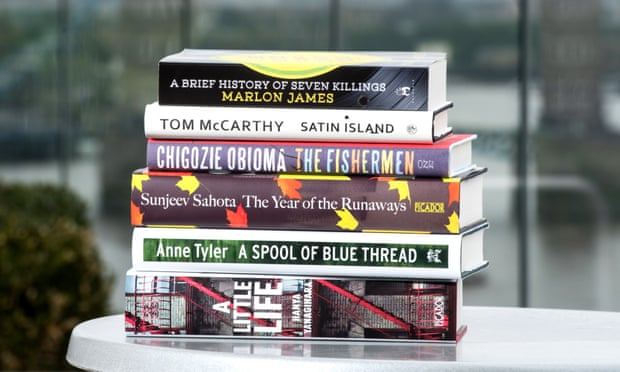
A Brief History of Seven Killings: well, E tried this one for 50 pages (as said before) and couldn't continue. The pidgin or Patois dialect was too difficult to decipher, and the characters were too extensive - even in 50 pages! Apparently, we're introduced to 75 different characters within the first 50-100 pages, so at least I doesn't feel quite so stupid! Still, obviously missing something here, as there must be something good in it for the nomination!

Satin Island: A tried it, and it was basically unintelligible. Another non starter.

The Fishermen:

The Year of the Runaways: E has read it, and A is partway through. Pretty good novel - darting between three men emigrated from India, and one woman, and their struggles there, and their pasts trials before moving. Quite a heavy read, but ultimately pretty good. Would have been more enjoyable with more of their lives in Britain, as it felt more interesting, but there needs to be a balance. A fairly good read.

A Spool of Blue Thread: as said before, a fantastic read. Just wonderful. In good hands from the offing. Recommend to anyone. However, it won't win as the judges look for something ground breaking and innovative in terms of structure or point-of-view etc, and this isn't it. What happened to just a Good Read? All the other titles are pretty horrific in their own ways and this isn't but was so compelling, and there's only so many awful things one can read. The world itself is bad enough.

A Little Life: E read this (not so little at 720 pages) one. Well, it is fantastically written, there's no doubt about it. You are completely inside the characters' (one in particular) heads, and feel with them. It's deftly constructed, has believable characters and a compelling storyline.
But.
I would not recommend this to anyone. Anyone. If you suffer/have suffered with any of the myriad difficulties explored, it is triggering, and a nightmare to read. Literally: I am dreaming about it. 'Impossible to put down... and impossible to forget...' I guess I agree with this review, but please don't read it. Apparently I was advised not to read it, but I only had this communicated to me two thirds of the way through the novel. I would have heeded the advice, and I pass it on wholeheartedly. Please don't read it.


Hanya Yanagihara (A Little Life) is predicted to win, according to 'The Bookies.' I hope it doesn't. I don't want anyone else to be exposed to it.

But we shall see!

Sunday, 13 September 2015

Summing up Sunday 13th September

What we've been up to:


  • A and E went on a hunt for more materials to weave into baskets from the hedgerows, after a lovely visit from E's 'good-father' and his wife. Both very successful, although A's basket is not quite finished...

  • A, E and supporter E went to Cadbury Garden Centre to look at fish for supporter E's new fish tank! Difficult decisions, but a radical rethink from cold to tropical fish! Back to the drawing board with new heater and filter. Had a quick look round the bunnies and squeaky-pigs, but the craft section has gone! Very disappointing.
  • Book Club discussing the Man Booker long list! Each person read one book and here are some choice comments.

The Chimes (JT): wonderfully enjoyable read, but possibly annoying if you don't have a background knowledge of musical terminology. Maybe not for the shortlist, as it reads a little like a young adult novel. Recommend to E and A particularly.
A Moor's Account (JC): retold story from a Moroccan slave character's point of view, reminded of 'Testament of Mary' from two years previous shortlist. Pretty good.
A Spool of Blue Thread (ET): regretting having never read Anne Tyler before! Beautifully formed novel, felt in very safe hands from the start. The kind of book where it isn't groundbreaking or dramatic, just an average family life, but you end up reading slowly - not wanting to read the end.
Satin Island (AJ): rather like the cover, this book was less interesting than watching paint dry. Didn't like the characters, plot or anything at all.
Sleeping on Jupiter (DW): set over a very short period of time (almost finished reading!) digging deep into the disparate protagonists. 
The Fishermen (CG): brilliant read, and a debut from a Nigerian author. It should make the short list! 
A Brief History of Seven Killings (ET... well, the first 50 pages): Not brief enough (700+ page book)
A Little Life (CG): found this a slog and too many characters to keep track of...
Did You Ever Have a Family (): 
The Green Road (AC): 
The Illuminations (AB): a good read, though not groundbreaking. The two interwoven stories came together slightly clunkily, and one story was more compelling than the other; maybe the extreme contrast improved it though. A not very believable ending soured the climax.
Lila (RA): hadn't read the two others in the trilogy, although it seemed okay to stand alone; Marianne Robinson is probably more established in the US? Stream of consciousness writing, would rather have had points to stop because you can't say 'I'll stop when I finish the chapter!' But a great read and should make the shortlist! 
The Year of the Runaways (CN): enjoyed, though not finished yet. Sometimes don't want to hear so much about suffering, seemed to be a very 'worthy' book. Seems similar to 'Five Star Billionaire' on the long list two years previously.

  • Not one, but two weddings! (or three if you count T and H at another in another part of the country). J and A to cousin J's wedding to T (very relaxed, family affair at a registry office), and E with two supporters (thank you J and M!) to an old school friend's. Very contrasting - church wedding, lovely tipis for the reception (though they didn't go), beautiful decorations, wedding car, amazing dress, the works! Moving ceremony and very grateful to be invited, and able to go.


  • The Winscombe Michaelmas Fair! For the first time in a long while, A wasn't there organising on the day! Quite nice to have a break, although she still missed it a bit. E entered photos, flowers and some craft things - and a good haul of certificates back, although disappointed at the photo compilations not being ranked. Still: two firsts, four seconds, one third and one highly commended. Just a shame about the photos.
(Winning collage of the sheep - a bday present for Alison, and each sheep is made from her own wool!)

 
(Losing photos on the theme of texture)


  • J stayed overnight in Devon after the wedding, and now A has left for a shibori dyeing course at West Dean until Thursday! Should be good fun.
  • 5/15 on Guardian Quiz. Did you know that Princess Anne was the first senior royal to commit a criminal offence? She had dangerous dogs. (We didn't).
Happy Sunday! If you're reading, give us a comment :)


Sunday, 19 July 2015

Summing Up Sunday 19th July 2015

This was a week in which everything GREW: the first sunflowers, the first gladioli, the first tomato and LOTS more currants and gooseberries.

And today was Book Club (Flight Behaviour, Barbara Kingsolver) hosted by our members who have moved to Bath, so it's their turn to host once a year, and we visit for a summertime weekend lunch. 
We harvested the mini carrots and beetroot:

and pickled them:


and added a courgette:


and added vinegar, salt,  honey and fennel seeds:


and then had some of the soft fruit:


The book discussion was good too.


Apart from that, two family visitors over the weekend, lots of time spent in the sun, a private visit around a show garden! (... next door's), and frantic crocheting as one baby came a little earlier than expected!

Happy Sunday.

Friday, 5 June 2015

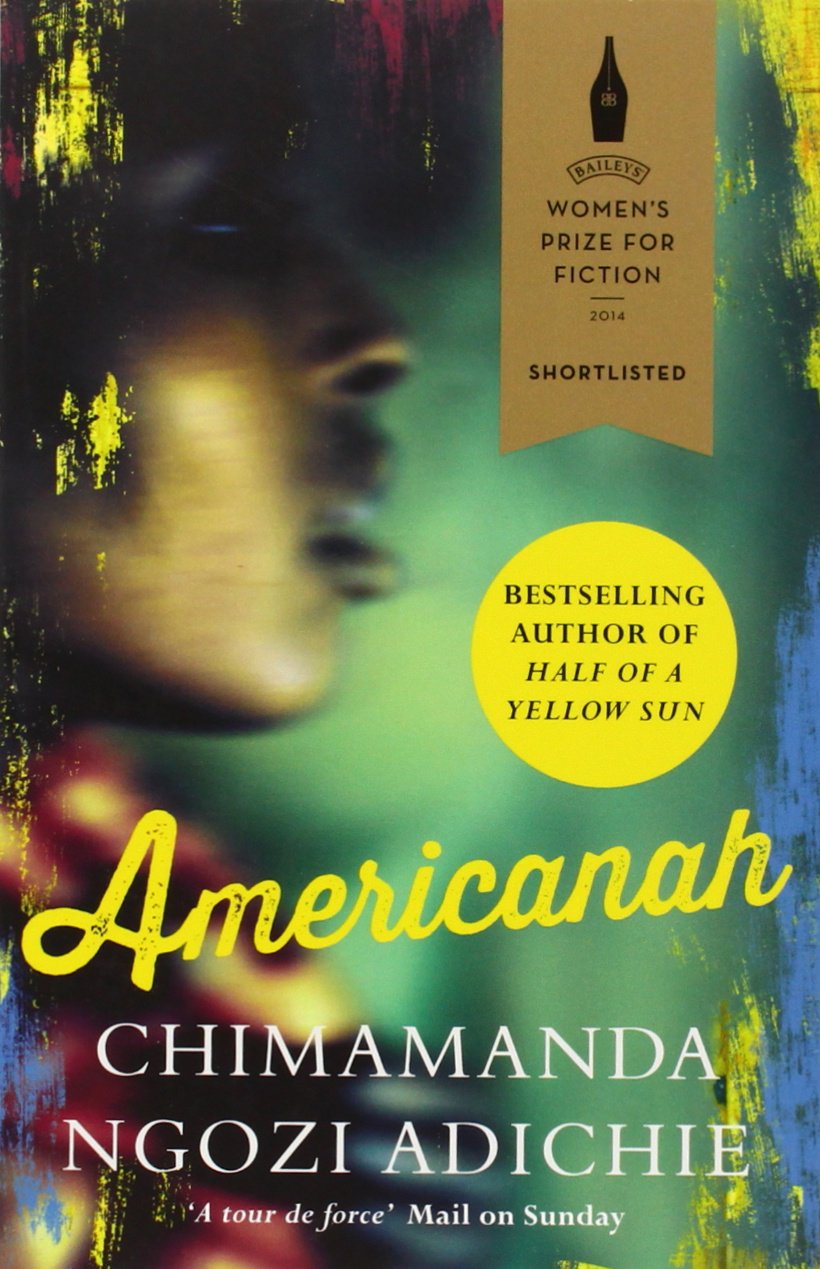
Book Review: Americanah by Chimamanda Ngoze Adichie


E: I've read Adichie's 'Purple Hibiscus,' but her second novel has been on my vague 'to-read' list for far too long. This, her third, being set as May's book put me into action!

Americanah is an engaging and deeply fascinating book. I really wanted her blog to be real - there are some nuances to being black in America then I ever realised. She has written a blog, but it isn't like the blog in the novel. I would also love to know if the same experience would be found living in the UK. I would assume that it's different, but I would like to know how. Am I blind to the racial details that go on in my own country? I didn't know what WASPs, ABs and NABs work. Am I the only one? It is far more complicated than I realised.

For example, it is very important to know how long you have been in Africa if you are a NAB (non-American black). The longer the time, the higher your prestige. You may speak differently with fellow black people, and have a 'White Person is Watching Us voice.' The differences between ABs (American blacks) and NABs is huge. Barely comparable. To most white people, it would not be important; but to black people it defines your identity. 

I had the opportunity to listen to parts of 'Americanah' on whisper sync, and I would advocate everyone doing this if possible. It was amazing. Brilliantly read; you can hear the differences between the characters and which country they originated from. The moment I heard Ifemulu's voice, it was as though I was listening to a support worker called Netsai, that I worked with about five years ago. It transported me right back; she was Netsai, she was my total experience of Nigeria, and I can vouch for that within my limited experience.

I was very interested in how much of 'Americanah' was autobiographical, so I went in search of Adichie on the web, and stumbled across a number of her Ted Talks. I would urge anyone to go and listen to them: she is a fantastic speaker, and also fascinating. I particularly enjoyed 'The Danger of a Single Story', as well as the more renowned 'We Should all be Feminists.'

But, I digress. The novel. She has a wonderful turn of phrase, much of the novel is an extended in people watching - which I love. '...like wearing a scratchy sweater in the cold: she longed to yank it off but she was afraid what would happen if she did...' What a brilliant way to describe that horrifically uncomfortable sensation of indecision. 

It was very interesting that mental illnesses weren't believed by immigrants; if it is not in the vocabulary, then how can it exist? There is no word for depression, what is self harm? Does something exist unless it is named? This is particularly poignant, thinking of the prevalence of mental illnesses in the first world countries. Another thing that struck a chord was the idea of 'returning to our roots', wanting to recreate the 'good ole' days.' This a luxury only afforded to the privileged: 'Third Worlders are forward looking... in the West their best is already in the past and so they have to make a fetish of that past.'

There were so many interesting factors to this novel; like the fact that Ifemelu actively choosesto give up her acquired American accent. Throwing off something that is supposed to be a real pinnacle to achieve, but she relinquishes it; her return to Nigeria; the attitudes surrounding Obama's inaugural election...

My one criticism is that it could have ended about one hundred pages earlier. This may sound an odd thing to say when I have just expounded the many interesting things it offered me; the extraneous part was the romance. It just felt unnecessary. I suppose a huge number of stories centre on romance; is this why Adichie included it? I feel that she is a more self assured writer to succumb to this. So, it leaves me wondering. There were two novels in this book: Ifemelu's experience with America, and her love interest. Couldn't we just have one?

J: Splendid! The third of Adichie's I've read, and the first to listen to as an audiobook more than reading (using whispersync, which was only partially successful in terms of synching). 

What was it about? Lots! Primarily the difficult moral world we all live in, and the many ways we deal
with it. Taking place in Nigeria, the US and London from the late eighties to about 2010, and seen mostly through the eyes of Ifemelu, who is a mid teenager when we first meet her, and Obinze, her contemporary and soul-mate (though I don't think that phrase is ever used). It is also very good on the complex subject of race and racism in modern America. 

That all sounds rather dry, and I didn't find it so at all. There are lots of lovely characters who I cared about (maybe too many) and I feel as if I learned a lot about places and ways of life I know nothing of through the lives I'm shown.

And although whispersync was a bit graunchy, it was read by a wonderful voice who did all the accents, adding tremendously to my enjoyment.

Friday, 4 July 2014

The Midnight Garden: MG Discussion

So, I've been being more active in the online world of book blogs and stuff this year, and I've been signed up for a read-a-long! For those that don't know, it's kind of like an online book group, where you read the same book (s) and then there's a discussion about them. It's a nice idea - talking books with people is fantastic in any way, shape or form.

I came across The Midnight Garden via GoodReads and following Wendy's (excellent) reviews. This year, the girls at The Midnight Garden are doing a Middle Grade read-a-long of all the classics that you may have read (or missed) as a child. For those, like I was, who are unfamiliar with the term Middle Grade, it's not quite Young Adult, but one step up from Children's. This means about 10-14 (I think!!?!).

I joined the bandwagon a bit late, so I missed the first book which was The Northern Lights - real shame as I love Phillip Pullman's His Dark Materials so much that it would have been lovely to read it with people. I've also missed one because I wasn't organised enough... So, at this halfway point I have managed three out of five books (it started in February). Not too bad... Hopefully I'll manage all of the next lot. The moderators at The Midnight Garden have been amazingly welcoming, and receptive to my comments (which haven't all been that positive at times!) and I really appreciate the sense of community. The fact that they take the time to answer comments makes me feel very included.

So, let's look at the books.

The first I read was 'The Luckiest Girl' by Beverly Clearly - I'd never heard of it, but it's apparently a classic wrong with this book, but it didn't really captivate me.
in America. There wasn't anything remarkably wrong with this, but I felt rather left out from the nostalgia trip it offered to all the American readers. It is a very light read about a girl called Shelley who spends one year (or two semesters, I think?) in orange county, staying with her cousins, at the age of sixteen. Basically, that is the premise and the plot of this book.

I think that the appealing thing about this sort of very dated book is the nostalgia element and, since the situation and the high school culture are not familar to me, I couldn't really take part in this. As such, it was... well, sort of boring. I hesitate to write this because (if it truly is a classic) then people might be offended, but I would expect it to work the other way round as well, ie. some British classics would not appeal to our neighbours over the pond. The writing isn't noteworthy, very little of substance happens, and I couldn't relate to her experiences.


Next was Anne of Green Gables, which (shockingly I know) I hadn't actually read before. Anne is such a silly young girl at the beginning, but it's very nice seeing her grow and mature. I wish I had read this as a child actually, as I think I'd appreciate it more then. I think it was one of my late grandmother's favourite books; she spent some of the war in Canada.

I liked Anne, despite her silliness, and although the plot is fairly banal, it was enjoyable to read.

Then, I missed out on A Wrinkle In Time, which was a shame - it looked good fun.

Most recently has been The Westing Game by Ellen Raskin: another book I'd never heard of (oh dear.) It's a mystery story, a murder mystery in fact: a genre that I have literally zero experience with, let alone of an American young adult/middle grade one. So, I was quite excited for something so completely novel.

Again, what lacked for me was the lack of nostalgia. I can imagine rereading this with pleasure, but since I have first been introduced to it as an adult, it doesn't feel the same.

Like Kim, one of the moderators at The Midnight Garden, I can embarrasedly confess that I didn’t “get” the ending until it was all spelled out! Am I just a very undiscerning reader? For me, I didn’t enjoy the plot line that much, but I did enjoy the characters. They were mostly a little larger than life, but it is an MG read, so that’s understandable.

Unlike many others, I wasn’t enamoured with Turtle, probably the main character. Maybe if I had read this as a child I would have been, but as an adult, her kicking of everyone’s shins and her obsession with making money on the stocks just didn’t make her appeal to me. On the other hand, I loved her older sister Angela and that story arc – agree totally that one of the most powerful moments in the book was when Angela changed her status from “none” to “person."

It’s Raskin’s little touches like that that made me continue with this book, despite being a bit lost by the plot (still embarrassed by how stupid I am!). I enjoyed the Epilogue, even though I was horrified that Angela ended up with Denton (a very boring man)… How can that be her ending??


So, there we have it. Halfway point of the year. I've already read the next one and will do a wrap up post in December I suppose! It's intriguing reading these classics with fresh eyes. What makes a classic? In my opinion it's something that lasts the test of time and doesn't feel dated; and for children's books, it's where the story can appeal to adult readers at the same time. Do not be deceived that children's books are easier to write! 

What do you think makes a classic?