Showing posts with label poetry club. Show all posts

Thursday, 6 June 2013

May-June Poetry Group


I realise we haven't posted this month's poetry group offerings, so I thought I'd do so now. These were chosen by cousin M - thank you very much!

The first is 'The Horses' by Edwin Muir, a poem that I've read a lot before and really love. M has suggested that we only learn the second part, but here is the poem in full:


Barely a twelvemonth after
The seven days war that put the world to sleep,
Late in the evening the strange horses came.
By then we had made our covenant with silence,
But in the first few days it was so still
We listened to our breathing and were afraid.
On the second day
The radios failed; we turned the knobs; no answer.
On the third day a warship passed us, heading north,
Dead bodies piled on the deck. On the sixth day
A plane plunged over us into the sea. Thereafter
Nothing. The radios dumb;
And still they stand in corners of our kitchens,
And stand, perhaps, turned on, in a million rooms
All over the world. But now if they should speak,
If on a sudden they should speak again,
If on the stroke of noon a voice should speak,
We would not listen, we would not let it bring
That old bad world that swallowed its children quick
At one great gulp. We would not have it again.
Sometimes we think of the nations lying asleep,
Curled blindly in impenetrable sorrow,
And then the thought confounds us with its strangeness.
The tractors lie about our fields; at evening
They look like dank sea-monsters couched and waiting.
We leave them where they are and let them rust:
'They'll molder away and be like other loam.'
We make our oxen drag our rusty plows,
Long laid aside. We have gone back
Far past our fathers' land.
And then, that evening
Late in the summer the strange horses came.
We heard a distant tapping on the road,
A deepening drumming; it stopped, went on again
And at the corner changed to hollow thunder.
We saw the heads
Like a wild wave charging and were afraid.
We had sold our horses in our fathers' time
To buy new tractors. Now they were strange to us
As fabulous steeds set on an ancient shield.
Or illustrations in a book of knights.
We did not dare go near them. Yet they waited,
Stubborn and shy, as if they had been sent
By an old command to find our whereabouts
And that long-lost archaic companionship.
In the first moment we had never a thought
That they were creatures to be owned and used.
Among them were some half a dozen colts
Dropped in some wilderness of the broken world,
Yet new as if they had come from their own Eden.
Since then they have pulled our plows and borne our loads
But that free servitude still can pierce our hearts.
Our life is changed; their coming our beginning. 


source


The second poem isn't one that I was familiar with before, a Jamaican poet called Louis Simpson, who died last year.


As birds are fitted to the boughs
That blossom on the tree
And whisper when the south wind blows—
So was my love to me.

And still she blossoms in my mind
And whispers softly, though
The clouds are fitted to the wind,
The wind is to the snow. 

Tuesday, 9 April 2013

Poetry Club April 2013 - Villanelles

Another common interest we have at CCC is enjoyment of poetry, mostly reading it, occasionally writing it, and also learning it. There is something very special about learning poetry aloud - it is like song, and feels like it should be an oral art. Also, the act of learning a poem off by heart necessitates knowing the poem very well, and, as with all good arts, knowing something more really adds to the enjoyment of it. You get to realise things about it you may otherwise have not done, you get to hear rhythms and subtle rhymes you may have missed, and you often end up reading others' views about it as well.

J and E have been learning poems aloud together for a while, from this book.


I would wholeheartedly recommend this book to anyone interested in poetry, even if you don't consider yourself as someone who "can" learn things off by heart. Ted Hughes' selection is amazingly wide ranging: from Auden and Sassoon, to Byron and Shakespeare: there is truly something for everyone. J has learnt the whole book before, but it is my first introduction to it (although I already know some of the poems) and I am thoroughly enjoying it.

We so enjoyed learning poetry together, and sharing it, that we thought to extend it. We now have a virtual poetry club.' It works pretty much how a book club works - each month someone has the privilege (a fairly daunting one!) of choosing one or two poems for everyone in the group to learn; we have a month or so to learn it, and then we "meet" on Skype to share them together, and talk about the poems as well.

This month is my month, and I have decided (nervously!) to do two villanelles. To those who don't know, a villanelle is a strict form that involves six stanzas - five that are tercets (three lines long) and the final stanza is four lines long. There are only two rhyming words in the whole poem ie. everything is either an 'A' or 'B' rhyme. Also, there are two "refrains" that repeat in a strict order throughout the poem, one in each stanza until the quatrain where they both appear. I like villanelles; I first came across the form in this brilliant book.


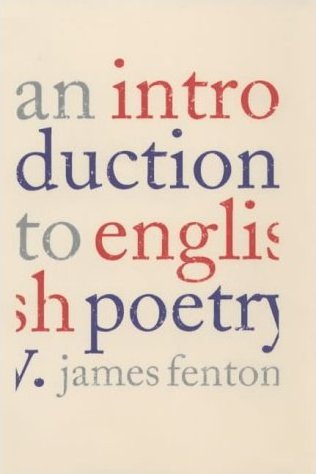
(Another book I would definitely recommend to anyone interested in poetry - I was given it at about age 10 or 11 by my gran and devoured it then; it's very readable and not dry at all.)

However, villanelles are notoriously hard to get right! The most famous is Dylan Thomas' Do Not Go Gentle Into That Good Night, but that just seemed a far too obvious choice. In the end, I went for two contrasting villanelles: one serious, and one comical.

The comical first.


The Grammar Lesson


A noun's a thing. A verb's the thing it does.
An adjective is what describes the noun.
In "The can of beets is filled with purple fuzz"


of and with are prepositions. The's
an article, a
can's a noun,
a noun's a thing. A verb's the thing it does.


A can can roll - or not. What isn't was
or might be,
might meaning not yet known.
"Our can of beets
is filled with purple fuzz"

is present tense. While words like our and us
are pronouns - i.e.
it is moldy, they are icky brown.
A noun's a thing; a verb's the thing it does.


Is is a helping verb. It helps because
filled isn't a full verb. Can's what our owns
in "
Our can of beets is filled with purple fuzz."

See? There's almost nothing to it. Just
memorize these rules...or write them down!
A noun's a thing, a verb's the thing it does.
The can of beets is filled with purple fuzz.


Steve Kowit.


I enjoy this poem - it's good fun! It also follows the villanelle structure strictly, whereas the next one doesn't.


One Art

The art of losing isn't hard to master;
so many things seem filled with the intent
to be lost that their loss is no disaster,

Lose something every day. Accept the fluster
of lost door keys, the hour badly spent.
The art of losing isn't hard to master.

Then practice losing farther, losing faster:
places, and names, and where it was you meant
to travel. None of these will bring disaster.

I lost my mother's watch. And look! my last, or
next-to-last, of three loved houses went.
The art of losing isn't hard to master.

I lost two cities, lovely ones. And, vaster,
some realms I owned, two rivers, a continent.
I miss them, but it wasn't a disaster.

- Even losing you (the joking voice, a gesture
I love) I shan't have lied. It's evident
the art of losing's not too hard to master
though it may look like (Write it!) like a disaster.