Friday, 25 October 2013

Day 2 HK Trip 2013 - Parker

I started the day by speaking to E on Skype subscriber, from my iPad to her phone.
Almost from the beginning of the conversation the sound quality was excellent, 'like a normal phone conversation.' As we spoke my view through the hotel window of the eastern harbour brightened and ships and ferries passed. From time to time, briefly, the buildings on Kowloon-side developed a golden shade to their eastern faces which told me the sun must be looking through a gap in the clouds.

Then up and out for a run! I had noticed a few people on the street below jogging past, so I knew it wouldn't be that strange. I had in mind trying to find the bottom end of the track A and I walked four years ago that went over Jardine's lookout. King's Road and its pavements we're relatively uncrowded as I went along for a couple of streets, then off up the hill. Almost immediately (and of course this doesn't show on a map, google or otherwise) it was very steep! Of course, but I was still a bit taken aback. Past a primary and a secondary school with lots of children streaming or dreaming in, then up the beginning of the "Eastern district jogging trail" which was a long flight of steps! Worth persisting with, because at the top of the slope was a long and winding path round the side of Jardine's lookout heading towards Mount Parker.


Then back to the hotel for a swim (their pictures including of the pool are good). The notice outside the pool said Air Temperature 29 degrees, water temperature 29 degrees, which told me the pool isn't heated, so as the air temperature was probably only about 25 degrees the pool was chilly. But fine for fifteen minutes pounding up and down. No-one else using it.

Back to my room, where I started reading Daniel Siegel's book "Mindsight": so far so very  good! Good FT homework to take on holiday, thank you Jeremy! When S and L got up (I phoned them at 10 as planned)  we decided we were so hungry and starting the day relatively late that we breakfasted at Starbucks opposite. Amongst the UK conventional Starbucks offerings were Green Tea Latte (BRIGHT green and too sweet) and almond and red bean scone (fine, not exciting).
The main expedition of the day! Off into central on the tram again (tram pictures) to catch the number 15 bus up to Mount Nicholson. From where the bus starts climbing the hill after the Happy Valley stadium it starts to look familiar, and sure enough the Mount Nick stop was where it should be, and the walk up the drive all the same...
then: 


All gone.


Very disappointing.


However we continued our day, going back on the no.15 up to Wanchai Gap to walk back a mile along Black's Link to see if there was a decent view down onto Mt Mick from above (there wasn't), and finally back on the bus all the way up to the Peak. 


Back in a taxi (we were hungry and there was a LOOONG queue for the Peak Tram) to the Three Virtues Vegetarian Restaurant, where they welcomed us back with a window table, and a complementary pudding dish of...not sure. Something vegetably perhaps from the gourd family, braised in a sweet ginger soup. Interesting, and probably basically nice. J's choice for the evening was vegetable shrimp with lava in crispy roll.


And so back to the hotel to plan for tomorrow.

Thursday, 24 October 2013

First day of the October 2013 Hong Kong trip


A brief record, mainly in pictures (taken with E's old camera) of J's trip to HK, in the company of sister S and niece L.


The first day was rather an extended one, starting in Winscombe, with my (intentionally retro, not that's not correct, because it is ACTUALLY old, not as-if old) luggage in the conservatory waiting for the off. We went from Bristo airport via Schiphol to Hong kong, leaving Bristol at 520pm, arriving at Shep Lap Kok at 330 the next day, which was 15 hours later.

(view from the hotel window)


And then explored, went out for a meal at the Three Virtues Buddhist Vegetarian  restaurant just along King's Road in Quarry Bay from our hotel, and from there in a tram along to Central to look a the big buildings and the Star ferry. Back to the hotel where it is now 1130pm.

(peach and lily bulb dish)
 
(Lots of people crossing the road from the top of the tram)
 
(The Star Ferry at night.)


Sunday, 20 October 2013

The Winscombe Man Booker 2013


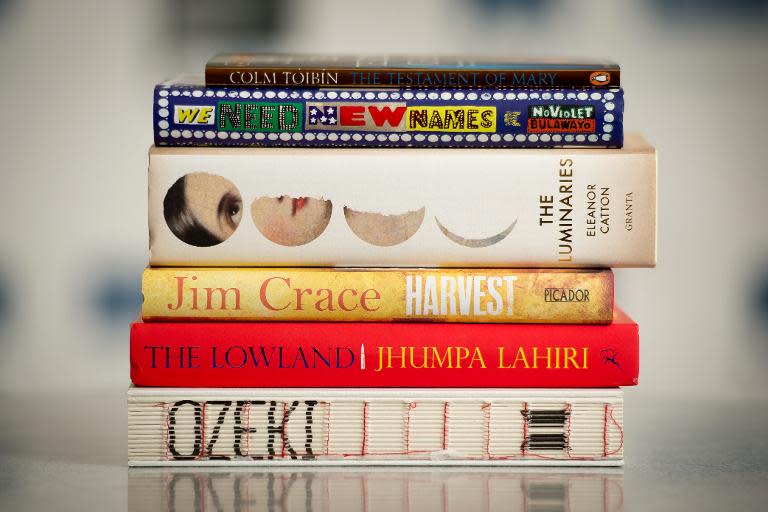
After much anticipation and with a palpable pulse of excitement building in the little North Somerset village of Winscombe, the 2008 Book Group met at the local library at 8pm, Tuesday last to debate, decide and declaim the Booker shortlist and winner.

Ably organised by A, highly experienced in such matters, the regular members of this literary debating club turned up promptly, to be greeted by the slightly nervous library staff, and several irregulars, drawn in by curiosity and the wish for a wider society.

By the time A and J had set out the chairs, the floor area was full. What a perfect venue for such an event! How pleased we were to lend our support to the noble enterprise of keeping alight the flame of literacy in this once noble backwater.

The librarian and her assistant busied themselves readying the equipment for our link to the Guildhall in London where the other Booker event of 2013 was taking place simultaneously.
At 810pm, satisfied that all the guests and members were refreshed and fortified, A called the meeting to order, welcoming the trepidatious newcomers and settling her own group (most of whom it was noted had dressed and even had recent topiary to mark the occasion!). The plan she announced was that each of the five shortlisted books would be addressed by its champion, with a synopsis, critical remarks and illustrative readings, each presentation not to take more than ten minutes.

J started with Eleanor Catton's The Luminaries. His opinion had not changed since his writing earlier in this blog, and he chose a piece from the beginning of the work (two sentences lasting a page) and from the end (a page of sentences of no more than three words). Both readings contained reference to rain, which J noted for the first time, and felt that this ameliorated his opinion a little.


J2 presented The Book of Mary, Colm Toibin, which she felt to be fascinating, a striking insight into the life of Mary the mother of Jesus, and well worth reading. Though it was very short, the aftermath was that of having read a much longer book, she said (and there was general agreement). J2 did not provide any readings.

R spoke about NoViolet Bulawayo's We Need New Names, starting with the remark that as it was now a month since he had read it, he remembered little. His opinion was once again little changed from that published earlier in this blog, though he added the remark that he didn't even know why it had that title (there was a murmur of dissent at this). Again, no readings were provided.


It transpired at this stage that none of the guests had read any of the books, and that apart from A and J, only C1 had read more than their own allotted book from the shortlist. This began to explain the slightly uneasy atmosphere and appearance of strain on the faces of some of those present.

The librarian was repeatedly making brief contact with the Guildhall, only to have her elderly Dell computer throw her off when a couple of sentences of Robert MacFarlane's (A's counterpart in London) peerless prose were heard.

A herself presented Jhumpa Lahiri's The Lowland, being generally very much in favour, and recommending it to all. 
 
D spoke about Jim Crace's The Harvest, describing it as 'almost poetic', and then responding to J's comment that he, D famously doesn't like poetry, by saying 'I did say "almost"'.

Finally A2 read from and brought to us her thoughts on Ruth Oseki's A Tale for the Time Being. Her opinion had entirely changed from her complete dismissal as written about earlier in this blog, and she spoke of how much she appreciated the way that Zen habits of living were shown in this novel to help people in difficult situations. At the end of her presentation, we were surprised to hear that despite her positive remarks, she would still not have felt it worth reading had she not had to read it.


The Decision: Opinions and opinionation were unusually lacking, perhaps reflecting the general lack of reading. D recommended Harvest and was backed up by C1, Joe strongly disrecommended The Luminaries, and instead promoted both Ruth Oseki's and Jhumpa Lahiri's books. If there was a positive decision, it was for Harvest.

The noble librarian, brought to a crisis by the recalcitrance of her technical equipment, managed to obtain and hold a connection to the Guildhall just long enough for us to hear 'And the winner is...' and to see that it was a woman (thus not Jim Crace), before the Dell finally crashed irretrievably.

The group broke up hurriedly, all rushing to get home to see the result (apart from R, who was rushing home to get the result of the England:Poland contest.)


 (images courtesy of the Man Booker website - thank you, and thank you for featuring us on your website!)

We await The Winscombe Booker 2014 with anticipated pleasure. 


Monday, 14 October 2013

Counting Down to the Man Booker: Day Six - A Tale for the Time Being

The end of The Coombe Cottage Countdown! Tomorrow is the grand announcement, and A and J's grand event in our village. The last book! What a shame to be nearly over!


J said: Ruth Oseki's book is my Booker winner for this year. I liked so many aspects of it:
the mystery of the washed up notebooks
what would happen to Nao
what would happen to Nao's father
Nao's amazing grandmother
modern life in Tokyo
modern life on an island off British Columbia
the little bits of Japanese
so much lovely life-detail
the Zen  proselytism
the way that Ruth and Oliver's relationship worked.

I suppose the only bits I didn't much like were the brutalism of Japanese second world war army life (yet again! it felt like), the nastiness of school children, particularly when their teacher joined in (and I didn't understand that), and the slightly messy and I felt unnecessary way that the end dealt with uncertain outcomes by bringing in quantum theory. Not serious though.
4.5/5!


A said: The last of my Booker reads and one I had not expected to enjoy. However it was a very touching and detailed tale of 3 eras of Japanese life through the diaries of. 15 year old. It's actually 2 stories again, just like the lowland and we need new names, with a second strand based in the USA. The hello kitty lunch box containing the diary lands on the shore of a writer and her husbands him and she - Ruth. - the name of the actual author unravels the bits of the tale not actually presented in detail in th diaries though a series of found letters.
I really enjoyed the Japanese story - the ancient Buddhist monk and the details of the thoughts and rituals, the family intactions, the world war 2 story all presented through 15 year old eyes. The immaturity and naively of this authorial voice is used very effectively. The other side of the story with a struggling author other other side of the world just didn't captivate me and the touches of magical realism with dreams and interactions between the 2 stories didn't work as far as I was concerned. I wondered whether the Japanese story alone would have somehow been ale to carry the story and whether we really needed the drawn out expose of authority control and writers block. Not a winner from my point of view I think.


For our previous posts:

Day One - A Testament of Mary 
Day Two - We Need New Names  
Day Three - Harvest
Day Four - The Luminaries

Day Five - The Lowland 


Sunday, 13 October 2013

Counting Down to the Man Booker: Day Five - The Lowland

Day Five of The Coome Cottage Countdown - and we're almost done! Here is book five, and our thoughts.


A said: I really enjoyed this book and of the final Booker 6 it was the one that most held my attention and was most believable. It's a story of two Indian brothers and their lives over the whole span of the eldest, Subash's, years. It covers life in both political and desperate Calcuttta and the expansive isolation and anonymity of life in the USA. its not very demanding emotionally, despite the intense subjects - power, regret and loss, compromise, identity, violence - and i did feel remote and uninvolved in much of the characters thoughts and lives.

It does have other major flaws - after the violent event that the whole of the book leads up to in the middle of the story it does becom more meandery, domestic and slightly less believable. The playing out of the end of Sabash's and Gauri's lives are not really of great interest compared to the emotion and drive and expectation of youth. 


However of all the bookers this is probably the one I enjoyed most but yet I think it will not win and will not really survive the test of literary time.


E said: In stark contrast to the last Man Booker Shortlister I read (Harvest) this book is set, not over seven days, but over seventy years or so! Quite a change of pace!

I thought that I had never heard of Lahiri before, but her style seemed familiar and I looked her up and realised that I had read a set of successful short stories by her entitled "Unaccustomed Earth." I much prefer novels to short stories, so expected to enjoy this a lot more.

The Lowland tells the story of a number of characters, mostly focusing around Subhash. He is the elder of two brothers but Udayan, his younger sibling, is the bolder, more passionate. The story commences in Calcutta in a period of Indian history that I am not familiar with, focusing around the Naxalite movement, a rebellion attempting to eradicate poverty and inequality. It doesn't mention India's caste system specifically, and I wonder whether this is a region-to-region thing, and Calcutta was less extreme in this respect? I'm not sure. Anyway, Udayan becomes very involved in the movement, whilst Subhash pulls back, creating a gulf between the brothers, previously so entwined. Subhash moves to America to study, starting a relationship with an American woman, who leaves him to return to her ex-husband with whom she has child. There is sparse correspondance from Udayan in Calcutta, until a telegram arrives from his parents telling Subhash that Udayan is dead, and he must return immediately.

Udayan was killed by the police for, at this point, slightly unclear reasons. No one will speak to Subhash directly about the day except for Udayan's widow, Gauri, who turns out to be pregnant. As is customary in India, she and Udayan had moved in with his parents, but the life she is now leading is intolerable in Subhash's eyes: his parents never agreed with the marriage as they did not arrange it, and are treating her as a servant. To rescue her, he suggests that they marry and move to America.

Here begins the next section of the novel. Gauri gives birth to a daughter, Bela, in America and her and Subhash fall into a sort of domesticity. But Gauri is unhappy with her ties to this daughter who only reminds her of her dead love, responsibilities that she never wanted. She is not a natural or willing mother. When Subhash and Bela return to India upon the death of Subhash's father, Gauri takes the opportunity to leave.

Bela grows, and grows apart from Subhash, much to his devastation. He loves her, truly, as a father - and she does not know the truth of her parentage. They had always been so close, their shared bond making up for the lack of connection that Gauri forged with her daughter. But Bela shuts her father out - whether to punish him, her mother or herself is uncertain. She moves away and does not leave addresses for Subhash. She becomes a nomad, no true place to call her home, fighting for local equalities and working on labouring farms. Subhash is reminded in her of Udayan, of his spirit, his vitality and wish for things to be different.

The book culminates in a sort of reconcilation. Bela continues to visit Subhash on occasions until she becomes pregnant and asks to move back in with him in Rhode Island; Subhash eventually tells her the truth of her parentage and she accepts it. Subhash remarries. Gauri returns to see her daughter (and deliver divorce papers that they had never formalised) and is rebuffed, but later Bela sends her a letter explaining that her daughter would like more contact, although she does not know the truth about Gauri's identity. And Gauri? She returns once more to Calcutta, and we learn the full truth of the events culminating in Udayan's death, the secret she has kept inside her all these years.

That was a long synopsis - but the novel encompasses entire generations of lives! It is a slow moving, ponderous book. It does not feel like a book that you can speed through. Lahiri's characters and even her settings are suffused with regret, with loss, with sadness, but also with a sort of beauty, a poise - they feel dignified. They are also credible; Lahiri's dialogue, interaction and thought patterns are entirely believable. It is, at times, a very solopsistic book on the part of each individual character - they all contain some nature of that quality, they all feel as though the world should work out the way they want it to. None get their wishes. You cannot read this book without a hollow feeling of sadness from almost start to finish.

It is also worth noting that this another book that does not use quotation marks to denote speech, but I hardly noticed it here (unlike in We Need New Names). I think if it isn't noticeable, then it must be appropriate - when you notice something, it is either because it is oustandingly brilliant, or really doesn't work. If it remains unnoticed, then it is quietly working, an understatement but one that fits. This can be seem to apply to the novel as a whole.

Although it isn't a page turner, you do want to finish it, but I had a sense that it could have been shorter. I'm not sure how exactly - but it felt like more than a novel and I kept on feeling that a culmination must be coming. The plot was relatively gentle for the most part, and I expected it to continue in this vein. Gauri's revelation at the end felt almost out of sync with this - it didn't feel like the kind of book to include a major change of realisation. It almost felt outside of the book, a coda, an accessory. It could have been a short story in itself.

It seems odd that someone who is so well known for the quality of her short stories has taken on such an epic subject for this novel. To write each requires very different skills, but I think that Lahiri has managed both.

I did enjoy The Lowland, but I almost felt there was too much of it. It was an epic story in length, but not so much in its events; at times it felt almost mundane. I enjoyed it much more at the time and unfortunately read some reviews of it afterwards that spoilt it retrospectively somewhat.

I am glad to have read it, but it would not be my winner. 


J said: I have to admit to not having finished Jhumpa Lahiri's The Lowland, but it's not because I'm not enjoying it.

I guess I would say this is my favourite sort of novel: about ordinary people put into some challenging situations, and with plenty of detail about their backgrounds so that I can feel that I understand why they behave the way they do, without the author having to stop and explain. It has the added interest of exotic locations: mid 20th century Calcutta and 1970s onwards Rhode Island, which is a new area for me. I like the characters and feel that the author does too, and so want good outcomes for them, and feel sad when these don't happen.


So is it my Booker winner for this year? No, I'm certain that it isn't, and that's because it lacks quite the compelling quality that this sort of novel can achieve, and perhaps also because the language isn't striking. I realise I haven't noticed the language at all as I read, and although that's a lot better than being brought up short by objecting to the way something is said, I also feel disappointed.


Back to reading!


And tomorrow will be the last day and the last book! It's been great reading and reviewing them - this is the best Booker Shortlist in a good few years.

For our previous posts:

Day One - A Testament of Mary 
Day Two - We Need New Names  
Day Three - Harvest
Day Four - The Luminaries

See you tomorrow! 

Saturday, 12 October 2013

Counting Down to The Man Booker: Day Four - The Luminaries

Past the half way point of our reviews and closer and closer to the announcement... Exciting stuff! Here is today's thoughts on The Luminaries.


A said: This is going to be the single book on the Booker short list I don't complete by next Tuesday, despite it being the first I started! I have read the first 200 or so pages three times and yet not been able to go further in this 800 page who-dunnit. It's an admirable read in many theoretical ways - it's Dickensian like in its feel with multiple well drawn characters in a really convoluted plot, probably accentuated by its setting in a Victorian New Zealand mining town. The narrator jumps around between characters and I just got bored, then lost concentration and lost the plot completely! I understand that it has a very special narrative structure that relates to the astrological infomration at the beginning of the chapters, and this dictates their length and content, but this passed me by completely as I didn't get past the lengthy chapter one! So I have to rate the book poorly as it felt unreadable this month, but maybe I will try again and do better in the future?


E said: Well, from a book of 104 pages to a book of  834 pages - the Man Booker this year is definitely diverse, if nothing else. Eleanor Catton's The Luminaries is, essentially, a sort of Dickensian style who-dunnit, set in the New Zealand gold rush. There are many twists and turns; you believe one thing about a character which is then made to shift, you believe something about a set of events, which turns out to be wrong. The book is curious in its form: each "chapter" is half the length of the one before. So, the first chapter constitutes about 400 pages of the book, the second 200 etc etc. Within each chapter are a number of sections, coming from the various thirteen (yes, thirteen!) central protagonists points' of view. Most of the loose-ends are neatly tied by the book's finish, although there were a few things left unclear - or perhaps I miss them.

Let's start by a confession: I don't really get on with Dickens.

I have enjoyed Dickens in the past (particularly Great Expectations, Oliver and A Christmas Carol ie. probably the very easy read ones), but, in general, I find his style overally labourious, unneccessarilly convoluted and too overtly focused on the all-seeing narrator, leaving no sense of reality for the characters. So, me likening Catton's style to Dickens' is not my version of a compliment. I feel it can be excused by Dickens as a mark of his time, and his stories are generally very good, but why would a modern author wish to emulate this? And, in my opinion, less successfully?

As for the structure, I simply didn't understand it. The declining chapter lengths is a very interesting device, but as for serving a purpose to the novel? Well, sorry, I missed it. The first chapter was long. And I mean very long. I almost didn't get through it - I imagine that most people who give up on this book don't actually get to the second. Which is a shame: the pace picks up and it definitely does become more readable. But should I, as a reader, have to toil through 400 pages in order to get to something that I am deeming merely "more readable?" I would find it hard to be positive about that.

I am being harsh - by the end, I did wish to know how the story played out. But that's about as far as it goes. I was so confused by the immense number of characters and plot lines - thirteen is far too many central protagonists in my book - that I feel I must have missed things. By the second chapter, I was mostly able to distinguish between the characters, although not entirely. I was following most of what went on, but not entirely. I found myself picking up the book because I wanted to read, not just because I had to get through it, but not entirely.

It is not my kind of book. Maybe it will appeal to people who enjoy this sort of genre more. As I have said, I was sort of enjoying it by the end - and I did have some fun confirming some things with J that I was confused about. But, overall, not a book I would recommend. It's not my Booker. 


J said: I don't rate this book, having founds myself annoyed and resentful for the two weeks it took me to wade my way through the 400 pages that constitute its first chapter. It picks up after that, and I did enjoy the second half with its shortening chapters and sections, its increasing speed of plot and the fact that I now at least could distinguish between most of the characters. I had by then already resolved to give as my opinion that it was a BAD BOOK.

This resolution was confirmed when I heard Eleanor Catton damn herself in two radio interviews, when she was on a promotional tour in the UK. I guess these things are arranged many months in advance, and that once she found herself on the Booker shortlist it was probably irrelevant, but unavoidable.

She said mostly the same things in both interviews: she had had an interest for many years in the 1860s New Zealand gold rushes, and then had combined it with a (non-believers) interest in astrology. I'm guessing that this meant that when she found her first novel (The Rehearsal, 2008) successful and well reviewed, she felt she could follow the drive of a graduate of the Iowa School of Creative Writing to invent an arbitrary structure for her second novel. So she made up her characters by looking at astrological birth charts for dates of people who might have been involved in a story at this period, and then (a terminal mistake to my mind) chose to make the chapter and section lengths follow an arithmetical pattern. Each chapter and section is half the length of the preceding one. The obvious effect is that at the beginning they are very long (400 pages) and at the end they are very short (half a page). If this worked, I could see that it might be a little interesting for the reader, and satisfying for the writer. I can also see that one might imagine it would suit the pattern that many novels follow, especially whodunnits like this, that they start slow and descriptive, and then get faster and more compelling, driven by plot until they are unputdownable for the second half.

It didn't work. That first chapter is a complete killer. I persisted through it because I was given the task of reading the book to report on it. The only other thing it had going for it was the vivid evocation of cold damp that felt very true to the west coast of South Island. Not enough to compensate for the frustration of being lost in an endless meandering tale from twelve different narrators whose voices were indistinguishable. I think that the author was also meaning to write in a Victorian style with long ponderous sentences, and short summaries at the beginning of a chapter of what was to happen. Unlike many modern readers, I like Dickens and Hardy, the epitome of this style, very much and Eleanor Catton does not achieve it in an appealing way. In a more forgiving moment I did wonder whether when I am reading a real Victorian novel I allow that way of writing, making myself not bored by it, and that I wasn't prepared to give a current author the same leeway. I don't think so. Eleanor Catton's prose is not colourful enough to be worth reading in the slow and considered way that long sentences force.

Enough of my reasons for giving it my 2/5 rating on Goodreads! It's a shame to be so miserable about something someone has put so much work into.

What was good about it? Plenty really. I did eventually want to know what happened in the story (though not, interestingly to any of the characters; she didn't make me care about any of them), and I did enjoy what I take to be a pretty accurate description of that part of New Zealand at that period: the almost complete male dominance, the complex hidden undercurrents in a society consisting entirely of displaced people hoping for a lucky strike to fix their lives, and the non-understanding that groups of people coming from different backgrounds and parts of the world (China, Maori, the British Isles) would have for each other.

Unfortunately that reminds me to come back to something else I objected to: the sudden interpolation of modernist character analysis into the story, stepping outside to make remarks in a way that would only have been possible many generations later. This happens many times (once for each major character?), interrupting the flow and spoiling whatever sense there was of a character's point of view. This is something the real Victorians do well. Is this because they have a more secure sense of authorial authority, or because they always tell a story from the outside, from the God's eye point-of-view?

I haven't read Eleanor Catton's earlier and I gather very good novel, but I am prepared to believe it is good. She is clearly competent, and I hope she can tame her wish to write in structures that destroy what a novel must do to be worthwhile: tell a good story.

Read our previous reviews here:
Day One - A Testament of Mary 
Day Two - We Need New Names  
Day Three - Harvest

Friday, 11 October 2013

Counting down to the Man Booker: Day Three - Harvest

Day three brings us the generally accepted favourite favourite to win, Jim Crace's "Harvest." But did we agree? Read on to find out...


E said: I haven't read any Jim Crace before, although I understand he is already a rather celebrated author with a number of prizes under his belt. I do wonder whether knowing it was everyone's (and by everyone, I mostly mean The Guardian) "favourite" to win coloured my views whilst reading it.

Harvest tells the story of a man called Walter in an unnamed village and the events that unfold over the course of a mere seven days following the arrival of a number of strangers to a previously closeted community. But, really, it is telling more than Walter's story, - I think it is telling a general story of what it may have been like for people when enclosures (sheep farming) were introduced in Britain. I remember learning about it in history at school and realising what a huge impact it had on your average villager, astonished by the devastation it caused - while you may need twenty men to plough a field, you only need one shepherd to watch a flock. The consequences were life changing for so many. The fact that Crace leaves the village unnamed for the entire novel (although it's quite short actually), seems significant - seems to be stating that this isn't about the individuals, it is about more.

Walter Thirsk is not a villager at heart. He moved, like his Master, Master Kent, to this village about twelve years ago. He had thought that he felt at home here, but as the novel unfolds he becomes more and more accutely aware that he is still an outsider, he is still displaced. The new faces to the visitors, also strangers, may have more in common with him than he wishes to believe at the beginning: the mysterious Mistress, her unnamed husband and father-in-law, and the deformed Mr Quill. Walter finds himself bound quite quickly to Mr Quill, and this sets him further apart from rural village life, which he is aware of, but not bold enough to do anything about. All these strangers (apart from Master Jordan, the cousin of Walter's master) do not share their real names. So who is Harvest really about, where is it really set?

That is the beauty of the novel - it is about anyone, anywhere, any time during the 16th century. But, larger than that, it is about enstrangement and being an outsider, of being too afraid to seize life with two hands and give it everything it has got, of the powerlessness of watching your life fall apart - at
any time. It can be about anyone. That sounds a strange thing to say about a novel rooted in a specific historic event (the introduction of enclosures), but that is the hypnotic effect of Jim Crace's prose. It feels like he could be writing to you, writing for you. Walter Thirsk is in all of us: the loneliness, the sense that you can never fit in, will never live up to your own expectations.

It is a very "literary" book. The writing is smooth and flowing, and some of the prose seems almost poetic. It ebbs, setting and moving like the seasons that govern the characters' lives. A lot is made of the weather, which would've been something the rural village life would have been governed by; Jim Crace also uses portents of stormy weather (that does not come) to remind the reader, as though we need reminding, that this story is not going to end well.

Although set over a mere seven days, it is quite a slow moving book somehow - if that is possible! Not in a negative way, but the nature of Jim Crace's writing means that you cannot speed through it.

This is a good choice for the Booker Prize and I would not be at all surprised if it won. It would make, I think, a worthy winner; I'm not sure how much I
enjoyed it per se, but I'm not sure you are meant to enjoy it. I certainly appreciated it. It is beautifully written, wonderfully crafted, a real work of literary art, and, I think, the sort of thing that the judges look for in the winners. 


J said: Jim Crace's Harvest is really a very well written book.

Of this year's Booker shortlist its words are the most carefully chosen. All of it is the thoughts and observations of Walter Thirsk, who although the newest inhabitant of the village, is also the last one left when disasters strike during the course of a harvest week. The short sentences and occasional archaisms suggest a late medieval way of speech, while actually not impeding easy reading. Casual cruelties are carried out without the perpetrators coming over as cruel people: they do these things because they see them as necessary, or they are too lazy or afraid to do otherwise, and I found this believable and a little chilling.


The basis of the story is that commercial 'necessity' causes the owners of the village to enclose the land to bring in sheep, and the havoc and hardship this brings about. We are more familiar with the Scottish enclosures, I guess because they were often more recent, and so can be seen as acts of callous colonialism, but in the seventeenth century (I'm guessing, the date is never stated) these things were carried out by English people on people that they knew well. The hardship and cruelty is no different, but the callousness may have been of a different order because of the proximity and common language.


I think this is my Booker winner so far, though not for me the most enjoyable or worthwhile reading. It is the skill with words that gives it that edge, and why I think it should win. 


A said: This read beautifully - poetic and crafted words and a well organised story with wonderful lyrical language. However ultimately I just didn't really want to read it and didn't find it that enjoyable. It's the story of an English village some time in the past around the 16-17th century over the space of their 7 days of harvest. It details a horrific and sad tale of the dark and cruel side of human nature and its this that made it an unenjoyable read for me. It needed some lightness and hope within it rather than the fear and suspicion that really dominated the story. I guess it might actually win the Booker but its not a comforting tale in any sense.


Have we found the Booker winner? Next update tomorrow - three down and three to go!

Read our previous reviews here:
Day One - A Testament of Mary  
Day Two - We Need New Names 

Thursday, 10 October 2013

Counting Down to the Man Booker: Day Two - We Need New Names

And here we arrive on day two of the count down - five days to go until the announcement! Today our review of choice is:


E said: I didn't have very high expectations of this, as the only person I know who has read it was pretty negative, saying it floated between "compelling prose and mundane drivel!" This is fairly damning, so I went in expecting to wade through it as fast as possible so I could get onto the next one.

However, I didn't feel like that at all. From very early on, I felt like I wanted to keep going - not simply to finish it, but because I wanted to know what happened, I wanted to learn more. It tells the story of "Darling," born in Zimbabwe who moved to America when she was about 10-11. As NoViolet Bulawayo (and what an exciting name!) was born in Zimbabwe and emigrated herself, I wonder how much of this was autobiographical. The opening chapters, set in Darling's hometown of "Paradise" (incongruously named, as it is a shanty town) are particularly vivid. There were a couple of scenes that really stuck with me, the images really blazed in my head - a woman hanging from a tree who knew she had "the sickness," children attempting to get rid of Chino - another child's - pregnancy because it would mean she'd die, but having no idea how to, squatting in the bushes after poaching guava from the neighbouring town of more wealthy Budapest, the haunting image of Darling's father returning from South Africa, a dying man, nothing but "length and bones. He is rough skin."

The title, "We Need New Names" has many references within the text. It is a direct quote from the time that the girls try to "[get] rid of Chino's stomach once and for all." In order to be doctors, Sbho announces that they need new names - christening themselves Dr Roz, Dr Bullet, Patient and Dr Cutter. But there are many things in this book that need new names. There is a thread running through of the incongruity of naming - the shanty town named Paradise, Budapest in the middle of Zimbabwe, Darling's friends (Bastard, Chipo, Godknows, Sbho, Forgiveness and Stina), and then these names that set them apart when she moves to America. Names are powerful in Paradise - they quote the names of American celebrities like Gods, and in America a man from Zimbabwe retains his connection to his children and grandchildren (whom has he never met) through naming: "He has named all his children and grandchildren... each name carefully thought out and finally given over the phone.
        It's how I get to touch them, Tshaka Zulu said to me one day... You see, every time they are called by name and they answer, I am the invisible hand touching them and calling them my own..."

In contrast, America seems less concerned with naming, apart from in the way that they may alienate people. To them, Africa is one country; they are barely interested in the separation of different places, the distinctions between different peoples. Names
are important: Bulawayo seems to stress this, and the loss of identity comes partly from the stripping of their names. Darling grows farther and farther away from Paradise, promising to return to visit, whilst knowing that she never will. The gulf has grown too wide, and if she leaves, she will never be able to return because she has no papers. She misses her old friends, but feels apart from them, their lives have moved on. Chino's daughter is named after her, but she almost forgets her existence. It is touching and poignant.

The writing style is fairly fluid, not quite stream of consciousness, but there are times it feels almost like that. The writing fits the age of Darling, and there are wonderful flowing sentences such as "Then we are rushing then we are running we are running and laughing and laughing and laughing" which conveys the sense of movement and urgency and excitement through its fluidity and lack of punctuation; it seems almost onomatopoeic. The one thing I do wonder about is the lack of speech marks for dialogue. I suppose it may have slowed down the narrative, and seemed less true to Darling's voice (the story is told in first person), but I'm not sure that either of these explanations are entirely true. If so, then it seems unnecessary to me; I don't mind unconventional use of grammar, but if the reasoning doesn't seem evident to me, then it seems annoying. This is somewhere in between: I think that I can see the justification, but I doubt its validity.

It certainly feels like a debut novel - Bulawayo has tried to include absolutely everything in it. You can sense her youth, her vigour, her need to speak, to be heard - and she has tried to cram everything into one book. This makes it seem a little clumsy at points, but the raw enthusiasm has a certain sense of endearment to it as well. It is not as polished as most "literary" books, but it has its own charm.

Overall, the book is poignant, nostalgic and ultimately sad. Darling loses her culture, her sense of being, in America and, although she discovers and creates a new one, the loss is raw and real. I think this is a story that needs to be told; I wanted more, I wanted to know more about Zimbabwe, about the feelings of loss, of not fitting in, the guilt, the estrangement. I wanted to understand. When I reached the end, I could happily have gone on reading - and what more can you want in a book?

Will it win the Booker? No - it isn't really Booker material. It's not literary enough, it's too wild and inconsistent. But, either way, I am glad to have read it.


J said: We Need New Names is a splendid, colourful, wild, angry and unsettling book.
It comes in two very different sections, the first as a young child in Zimbabwe, where life is violent, cheap and precarious, and then in Michigan (the transition is not told, and this was a little frustrating) from the age of perhaps 12 to 16. I found it easy to read and fairly compelling, poignant and interestingly informative.


Zimbabwe is a place we hear about in the news in sudden bursts, with nothing between. It is mostly portrayed as a basket case of post-colonial mismanagement and elderly dictatorship with a suffering population. We also regularly come across Zim ex-pats, who seem to be pretty well-educated, and not to match the news stories (how should someone who has escaped from a violent unsafe country seem?). So one of the things I liked about WNNM was the opportunity to get a detailed picture of what one of those lives might have been like.


NoViolet Bulaweyo seems to have written in a great hurry, blurting out what she had to say. Perhaps one of the most telling chapters is near the end, when she speaks in the voice of all the collective displaced of Africa, homeless and yearning and misunderstood in the rich West. It is a chapter that isn't directly part of the rest of the story she tells, but the emotion in it, bitterness, self-pity and perhaps also blame, is I think what underlies this story and the way she tells it.


The language reflects the mood, and carried me along at great speed.


I shall be interested to see how NoViolet writes when she is telling a different story. 


A said: My good friend Richard disparagingly described this at a book club meeting as a novel by a girl who grew up in Zimabawe and then moved to the USA talking about a girl growing up in Zimbabwe who moved to the USA... He felt he had little else to say!

It is true that this is what it is entirely about - the oxymoronically named shanty town of Paradise where Darling grows up playing extraordinarily named games amongst deprivation, HIV, incest and rape is the story of Zimbabwe through a child's eyes. It's a violent and ulimately sad but not self pitying depiction of the country and its huge contrast with American culture. 


Its erratically written and feels hasty as if the author has a childhoods worth of specific experiences and stories she has to tell and she must convey them all in a single novel. Some of the book feels cursory and rushed, and each chapter has a slightly different voice and feel. However the voice of Darling is believable and I idid feel compelled to read to the very end. A piece of lasting and crafted literature it is not so I don't feel it will win the booker but was a brave choice to put on the short list.


See our previous review here:
Day One - Testament of Mary  

Wednesday, 9 October 2013

Counting Down to the Man Booker: Day One - The Testament Of Mary

So, it is less than a week until the results for the Booker come out - we've been reading them all, and what a rollercoaster it has been! We're mostly agreed on our opinions, good and bad, and it's been such a lot of fun. I, for one, feel quite bereft that we're almost finished!

With six days to go, we will count down each day reviewing one of the books on the shortlist before the announcement on Tuesday 15th - and the Man Booker event in our village! Exciting stuff. Without, further ado, let's start!


E said: The first of my Man Booker Shortlist reviews! I thought I'd start reading the list with this one, as it's so short and then I could feel some sense of accomplishment, because at least I would have read one!

The Testament of Mary tells the story of Mary, years after Jesus' crucifixion, looking back on his life and, specifically, the time directly surrounding the crucifixion. It is told in first person, almost stream-of-consciousness like and is very personal.

The first thing to state is its brevity - it is a mere 104 pages! Personally, for me, this was my main problem with it. It didn't go deep enough, we didn't hear Mary's distinctive voice enough, I didn't hear enough about her skeptisism regarding the disciples and Jesus himself. And I wanted to - what there was was good, but there just wasn't enough of it, so I was left feeling cheated.

It is a harrowing story. To feel that about your own child, to have doubts like that about someone that you have carried: these horrors are transmitted well onto paper. But, somehow, it didn't quite captivate me. I felt with Mary, but it simply wasn't enough.

That's my overall opinion: it's a good book (I hesitate to label it a novel), but I needed more. It was disappointing that Toibin cheated us out of this.


J said: I was not surprised to be disappointed by Colm Toibin's The Testament of Mary . I found this a slight and light book, in all senses. To write a novel about Mary the mother of Jesus, I expect the author to have interesting and original insight or point of view. Colm Toibin does have this to a degree. His point is that Mary was skeptical about her son's holiness and largely believed that he was carried away the by adulation of his fans. That is about as far as it goes. Miracles did appear to happen - the raising of Lazurus and turning water into wine - but they were shabby, and not the act of a God. I would have preferred these ideas to be dealt with at much greater length; I wonder if, as a, presumably, lapsed Catholic, Colm Toibin did not have the courage to pursue his idea any further. 

I did like the way he described Mary's thought processes, and I also appreciated the sense of ordinary life in Palestine at that time. So, that overall I would rate this book 2 1/2 out of 5.


A said: This was a traumatic read - a first opinion account of Jesus as told by his disbelieving exiled mother, who is baffled and tormented by the 'misfits' who surrounded him and continue to monopolise him even after death. It is harrowing on a number of levels: the story of the cruxifiction is horrific, but the age old parental experience of a child you have created becoming unknown to you, and even at odds with your sane view of the world is also hard to walk alongside. I wondered how someone who is a Christian, and particularly a Catholic might view the portrayal of Mary and particularly the loss of the Mary who traditionally intercedes on the behalf of sinful mankind.
So it was compelling for these rather harsh reasons but it felt short, almost cursory, and curtailed - hardly a novel in terms of length, and it felt unresolved and unfinished because of the finality of the underlying narrative. It's well crafted and simply written so that it does have a believable voice, but I don't think it should win the Booker!


Tune in tomorrow for the next of the shortlist!

Friday, 4 October 2013

What I've Been Reading: September 2013


Instead of waiting such a long time, I thought I'd do a shorter update on my reading escapades - less in one go seems like a good idea. The latter half of the month has been taken up with trying to dash through The Man Booker Shortlist before the announcement, and before that I was reading a rather random assortment of books. Except for The Man Booker nominations, nothing really stood out for me, and I was glad to have some really meaty books to get my teeth into. But here are my thoughts on a few.


This was picked up randomly from one of those shelves of books where people leave books behind; it's always a lottery - have they left them because they want to share how good they are, or have they left them in disgust because they're terrible? Well, to me, this was neither. It was okay. Fairly banal. It's the story of Marigold Green, brought up in a boys' school as her dad is one of the housemasters. It's a sort of coming of age story, I suppose. She grows up, meets boys, questions things about herself and the world around her. It felt very dated.


This is the second in the Divergent series, of which I read the first one over the summer. I got this out of the library and had to reserve it actually, due to its popularity. Well, it was, again, okay. It was very convoluted, even more so than the first one. The main problem was the serious abundance of characters. I just couldn't keep a track of them all, and Roth seemed to expect us to remember each of them, without giving us really any hints on where we might know them from. Often, it's fairly annoying when authors begin books in a series with a sort of recap, but I would really have appreciated it here. It was too much for me. I like the character and will probably read the third one, just to see the outcome, but I was disappointed. The first was a lot better.


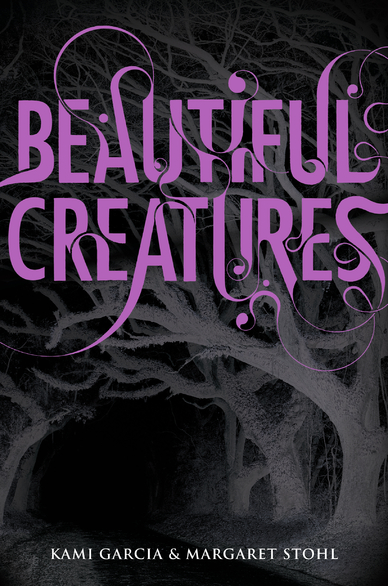
Now, I only read this because H did her masters on YA fiction, and this was one of the book series that she focused on (I won't say more, because it's not my dissertation.) So, I read this in the hope that this would give me a plausible reason for getting to read her dissertation! Well, as H warned me, it was... well, terrible. I don't think she put it as strongly, but that was my feeling. It was ridiculous, cliched, predictable, over convoluted and all-round irritating. It wasn't even well written. I struggled through it just so I could say I had read it, but it really wasn't worth it. Needless to say, I will not be reading the others in the series.


Another Jodi Picoult - my comfort reading. I enjoyed this one a lot. Not my favourite of her books, but still very good. It tells the story of a female anthropologist, Cassie, and her private struggle with abuse from her world-reknowned movie star husband, Alex Rivers. I enjoyed the first half of the book much more than the second; when she had regained her memories and had run away to live in a reservation with native American Indians, it just didn't seem as real. I'm sure Picoult did her research, but it is unlikely to be something that she had personal experience with, and this, for me, showed. I put myself in a state of suspended disbelief and kept going, but it still had an undertone of unreality. Still, a good read overall.

Both, The Spare Room and My Lover's Lover were books someone picked up for me from a charity shop. I don't have much to say on them - they were okay. Not stellar, not terrible. Disastifying.

So, onto The Man Booker Shortlist!


 These are my four (out of six) so far. Now, in case people (A&J principally as I don't think anyone else reads this blog) has not read these, I will post links to my Good Reads reviews, so as not to spoil them for anyone.

And now I'm onto The Luminaries by Eleanor Catton which is a monster of a book: over 800 pages! I'm more than half way though, so well on track to finish reading the short list before the announcement.

Hope someone, somewhere enjoyed reading this!

E xx